Weekly Ceramics

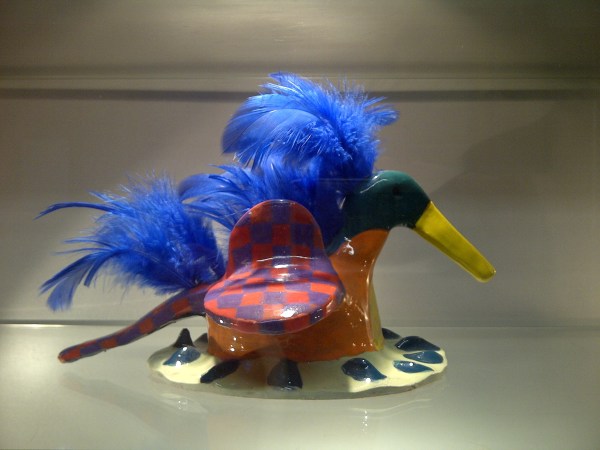
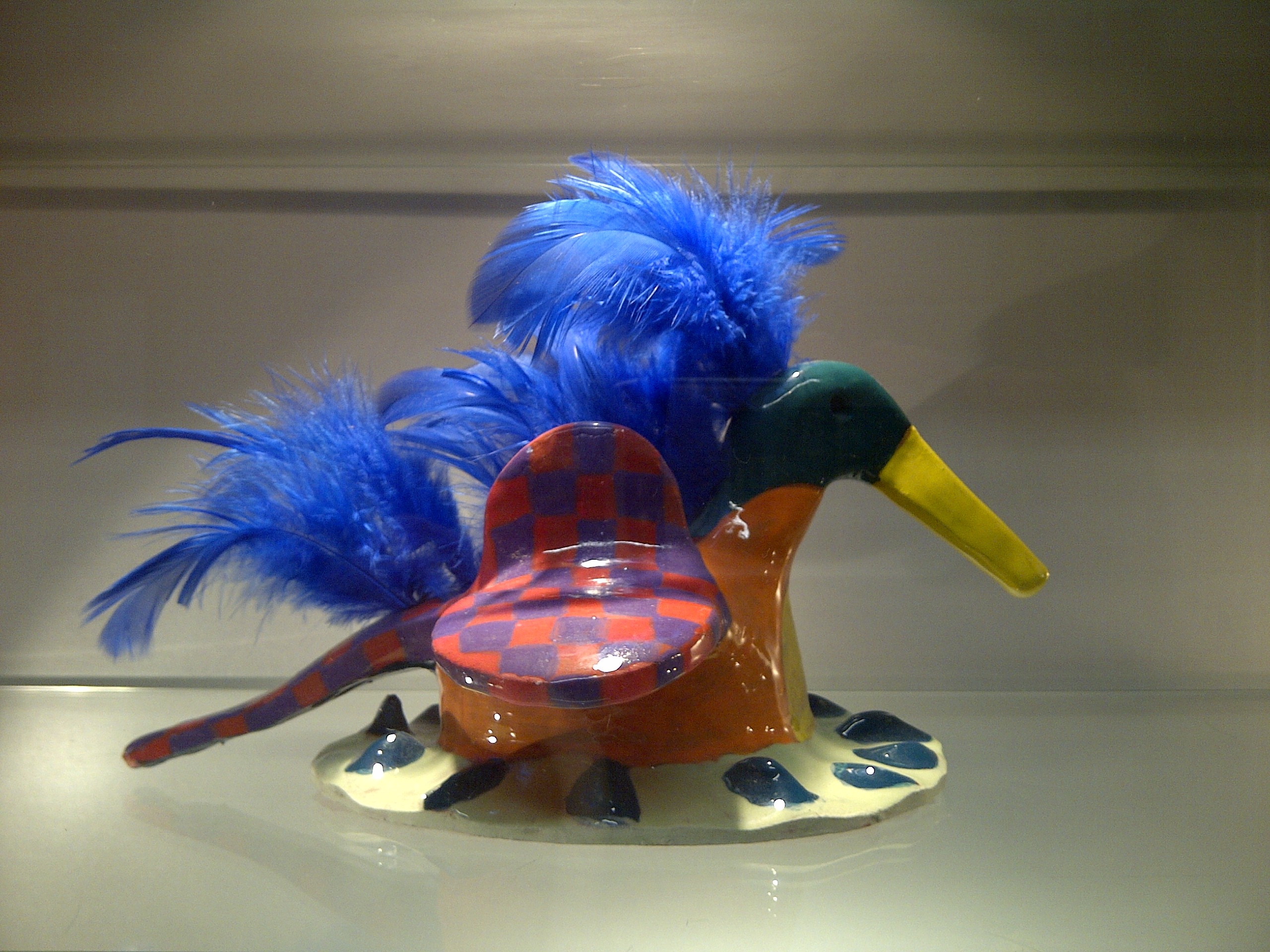
Ruskin Gallery at Working Men’s College is pleased to announce the upcoming exhibition by ceramicists, including Sheila Armstrong, Wendy Arnot, Marcella Mameli Badi, Richard Bates, Beata Bechtold, Elizabeth Bordass, Antonia Brown, Pisched Hughes, Uta Hodgeson, Lesley John, Mirian Mozower, Margret Rich, Karne Sussman, Hilke Tiedmeann, Tony Ryle, Oka Ward and Nicola Web.

As the title of the show suggests, the exhibition will be changing weekly to expose different artists and their approaches to the medium of ceramics.  In so doing, the collections of works also aim to pronounce the fleeting nature of exhibitions, contrasted by the solidity of some of the bigger ceramic pieces.  Everything is ephemeral.

An artist once commented that all works of art should be lived with, experienced with for a long time to realise the beauty of it – yet on the other hand there is still a great aesthetic in the short moments of pleasure that is strengthened by its elegiac quality, which is best captured by ceramic objects.

For more information about the artists and for images of their works, please contact Erica at EricaS@wmcollege.ac.uk or through http://www.ruskingallery.com.

Exhibition open Monday to Saturday 10-5pm

1st Year Portfolio 2012

Press Release

1st Year Portfolio

9 March – 30 March

Ruskin Gallery at Working Men’s College is pleased to announce the upcoming exhibition by 1st year students from the Portfolio preparation course.  Seven artists including Gulcan Cimen, Irati Martinez, Nicola Kirkham, Philip Niesing, Robert Eunson, Tracy Holtham and Ashley-Yin Karriem share their professional developments and aspirations.

There is certain uniqueness present in the hung works – ripples of uncanny-ness emanate and a sense of solidarity is so vivid in many of the works.  The artists presented here have much more of a confined practice, meeting only twice a week at WMC to collect and gather information with each other, whereas conventional institutions will see artists socialising and developing much more collectively.  The outcome of a solitary practice like this, are artworks less influenced and much more challenging in one’s artistic understandings, aesthetic valuations and societal perceptions.  In other words, less institutionalised.

The exhibition then, is here to not only introduce these works and the artists, but to celebrate their definitive approaches and manners in creating a piece of artwork.  It aims to bring up unusual perspectives and uncommonly references that should not be ignored, but respected.

The portfolio preparation course is a two-year part time course that offers students opportunities to work across a variety of media and techniques including drawing, painting, sculpture, print, collage and digital imaging. The course is designed to encourage students to develop their own ideas and visual language in order that they can develop their portfolio. Some students progress on to BA level course while others develop their portfolio for personal development or use in the future. Creativity and individuality is promoted through a range of projects and supported by group discussion, individual tutorials, site visits and research trips

For more information about the artists and for images of their works, please contact Erica at EricaS@wmcollege.ac.uk or through http://www.ruskingallery.com.

Exhibition Private View: 13 March 7:30 – 9pm
Exhibition open Monday to Saturday 10-5pm

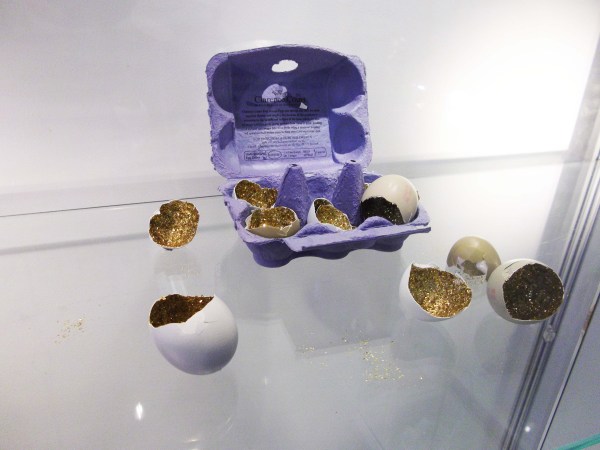
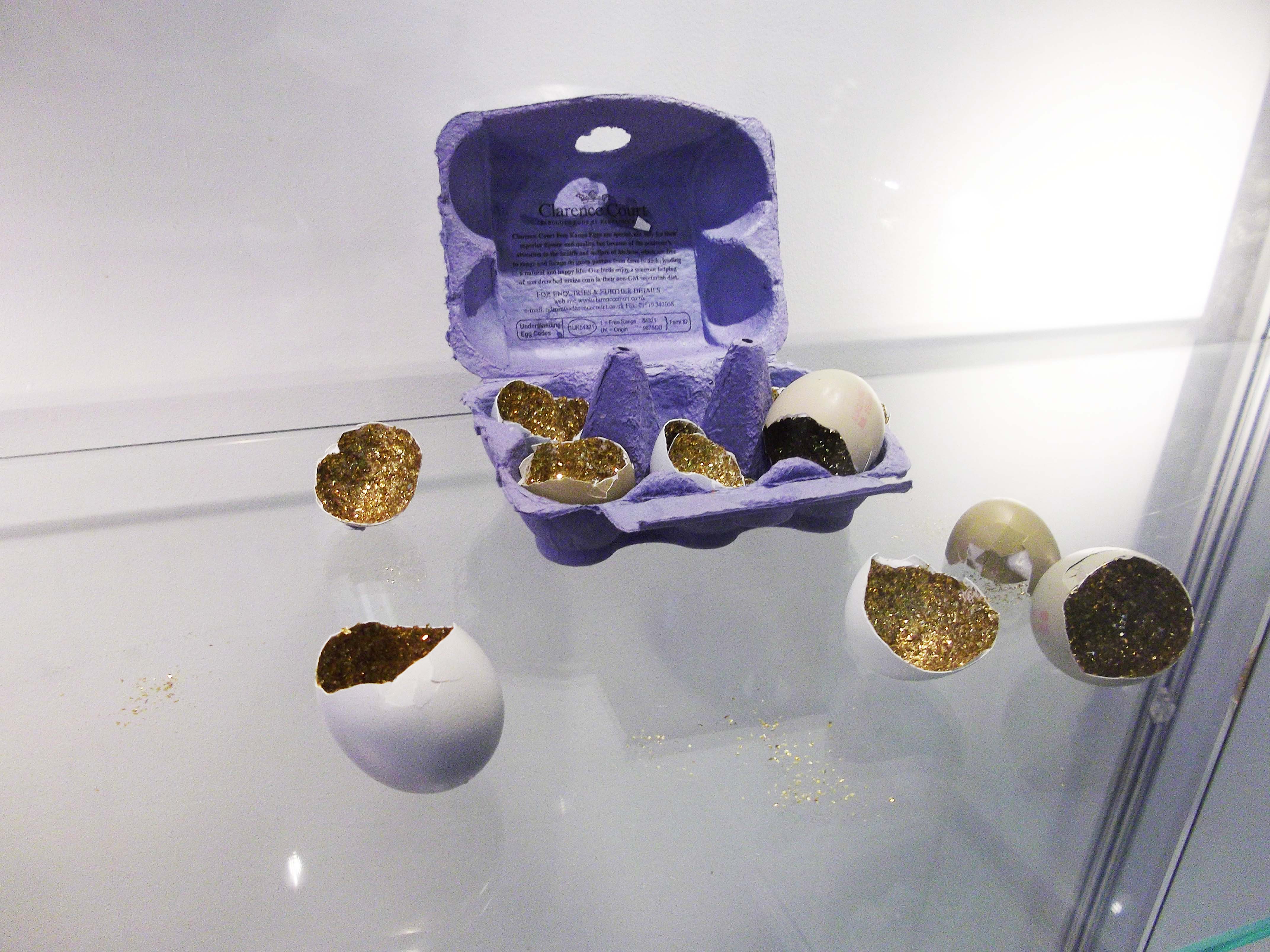
Robert Eunson “Eggs”, 2012

Installation view

Installation view

Philip Niesing “Untitled” 2012


Neil Stoker

10 February – 8 March 2012

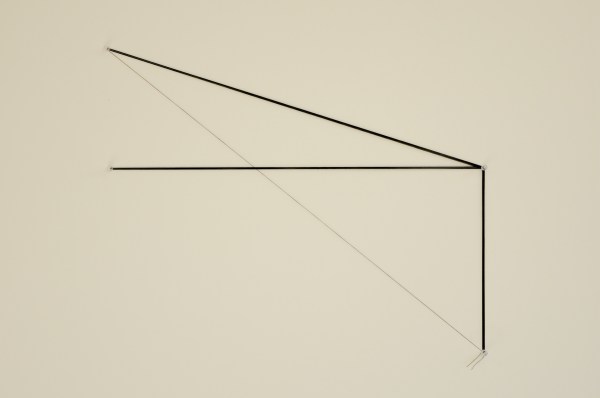
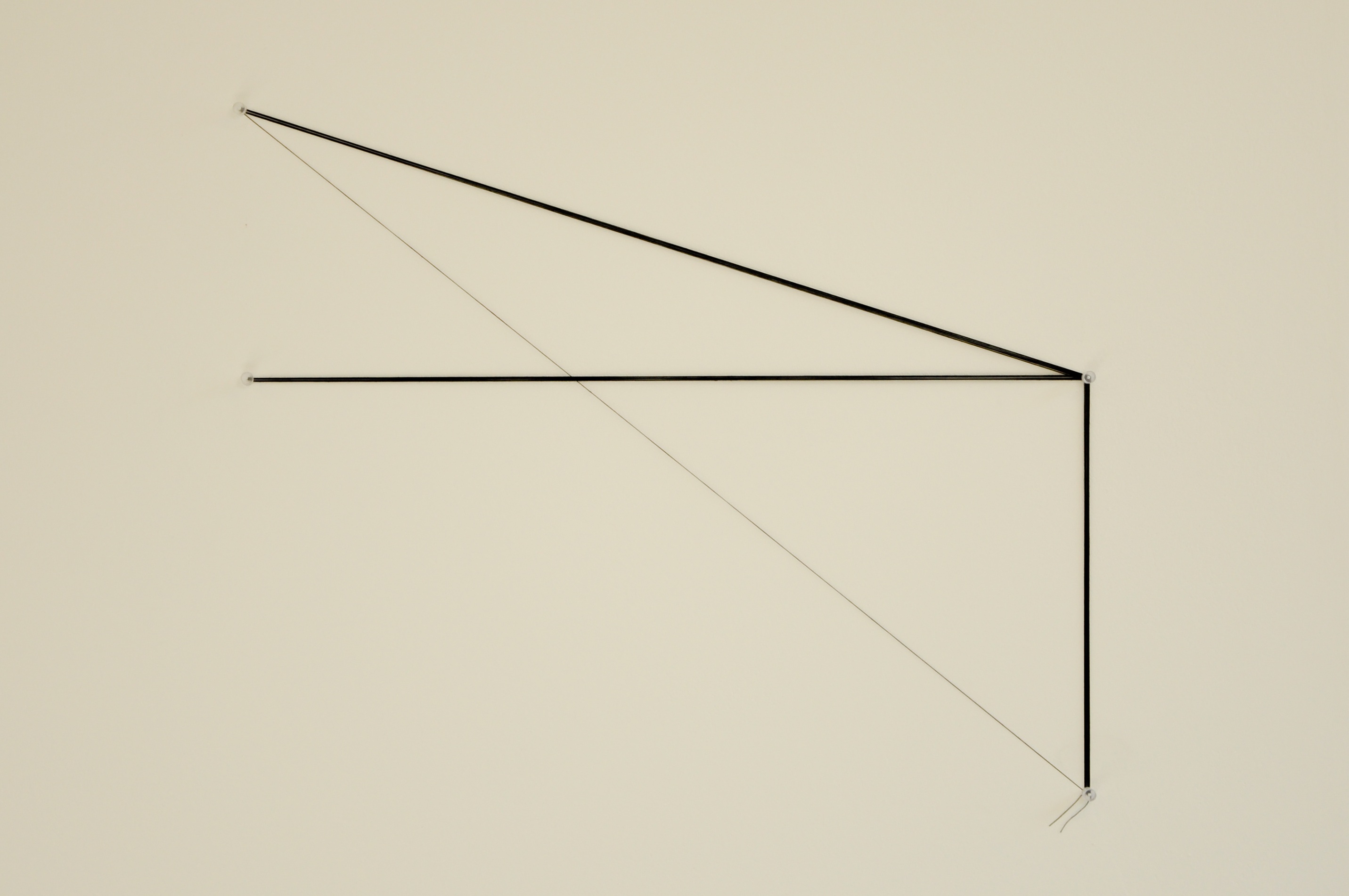
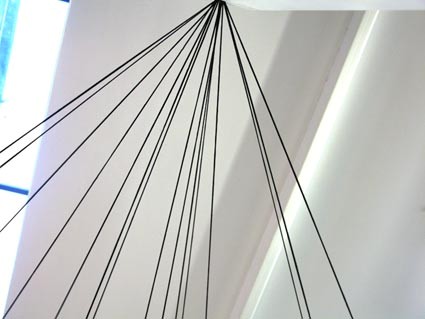
Ruskin Gallery at Working Men’s College is pleased to announce the upcoming solo exhibition of WMC alumnus Neil Stoker.  Amongst many other things, Stoker’s practice involves a series of drawings done by linen thread, and by using this medium, he often prompts questions about how one can create a single line or a piece of drawing that is not confined to graphite on paper.

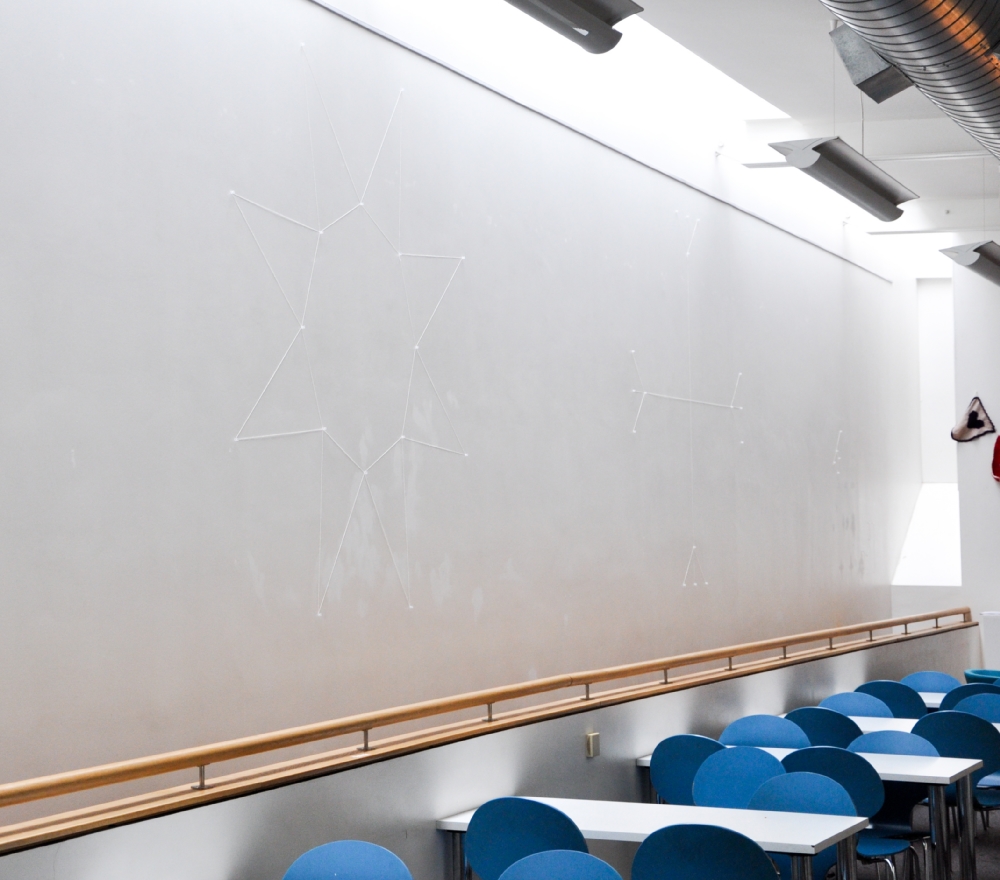
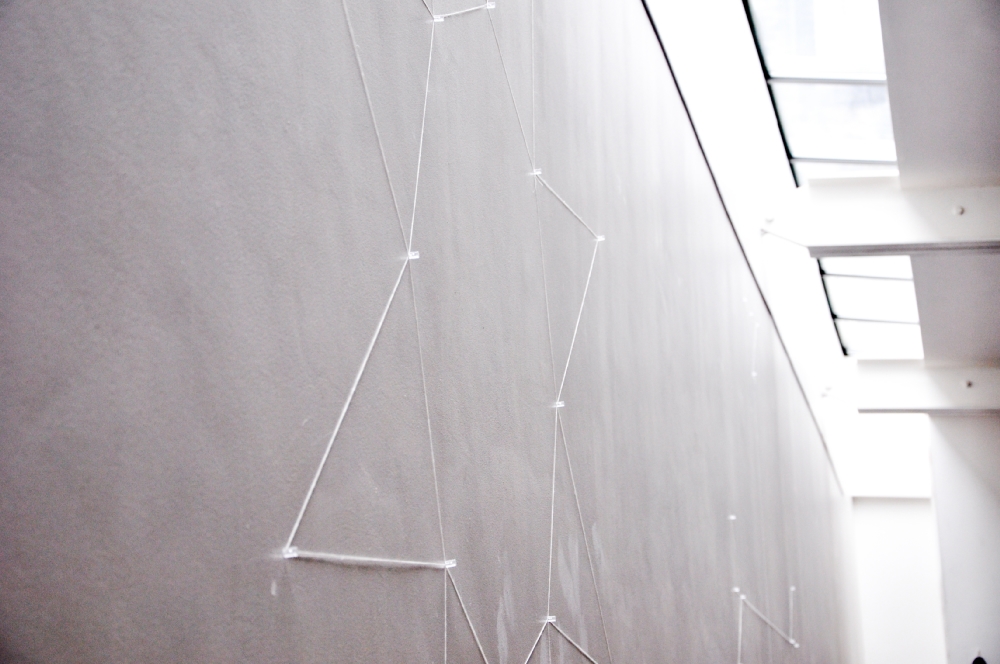
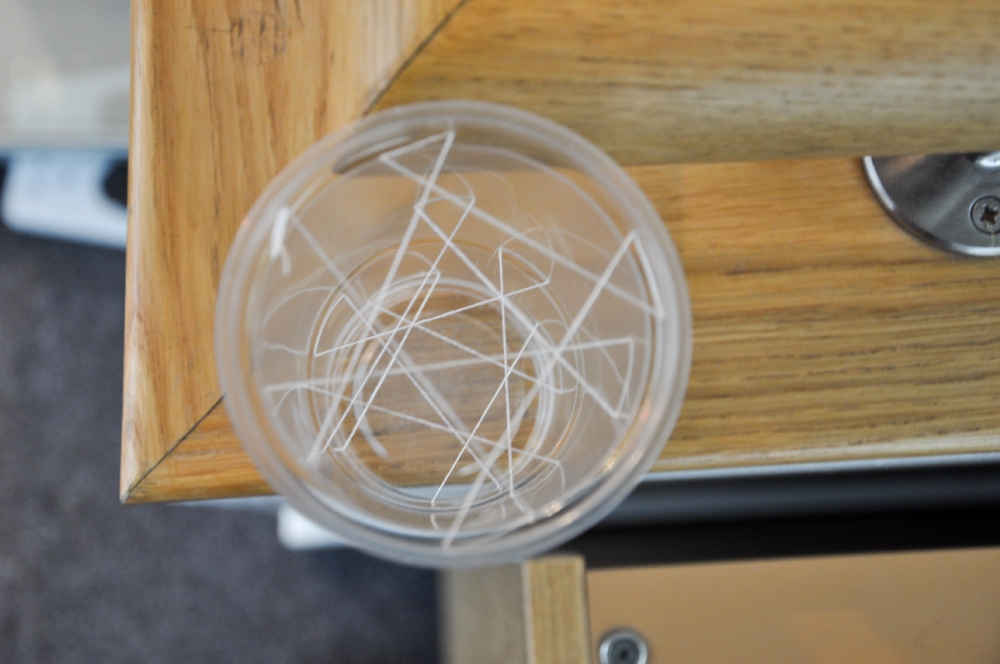
On this occasion Ruskin Gallery commissioned the artist to produce a site-specific installation on the wall as well as small-scale interventions within Working Men’s College.  Whilst his white linen work  appears as a direct influence from John Ruskin and the Ruskin lace pattern, his smaller intervention works are often hidden, insignificant or barely perceptible.  Yet the sense of quiet discovery is very much at the heart of his practice, as is the ephemeral and subtle qualities inherent in the use of thread.

Stoker’s commitment in utilising thread as his material to draw also highlights many branches of inquisitions, including a discussion that touches upon femininity (seamstress) or masculinity (tailors).  Another reference that maybe visited is around craft (embroidery/sewing), contemporary art, and the assigned hierarchy between the two.  In attempting to reconfigure these boundaries, Stoker also imagines himself to be bridging the “chaotic and the ordered, the formal and the decorative, the hidden and the exposed, the spontaneous and the premeditated (2012).”

For more information about the artists and for images of their works, please contact Erica at EricaS@wmcollege.ac.uk or through www.ruskingallery.com or www.neilstoker.com/

Exhibition open Monday to Saturday 10-5pm

Neil Stoker lives and works in London.  He graduated with a BFA from Chelsea College of Art & Design in 2009, and has exhibited at RK Burt Gallery (Paperwork, 2007), Nolia’s Gallery (Enough, 2007), Arthouse (Primary, 2008) Waterloo Gallery (I’m Open. 2008) and at the Old Police Station (Johnny Funstopper’s, 2010).

Installation View 4

Traces of Ruskin, 2010
Bleached 13/1 linen thread and clear plastic pins

Installation View 5

Installation View Traces of Ruskin

Installation View 6

Detail of Traces of Ruskin

Installation View 7

Installation View Traces of Ruskin

Cups

Untitled, 2010
White/black linen thread sown into disposable plastic cups.

Installation View Untitled

Installation View Untitled

Food for Thought No.2:  ART and art

Written by Erica Shiozaki

A single development that occurred from 1877 to 78 forever altered the lives of art critic and writer John Ruskin and painter James Abbott McNeill Whistler.  A statement made by Ruskin regarding Whistler’s Nocturne in Black and Gold: Falling Rocket had prompted the painter to prosecute the art critic who published the libel in a socialist magazine Fors Clavigera (published by Ruskin).  Although Whistler won, he was granted only a fraction of what he initially demanded and Nocturne was deemed unsellable due to extensive damage done during transportation to court.  Irony ensued as Whistler became bankrupt whilst Ruskin lost his reputation, and his mental health declined.  What this artistic and legal development pronounced was a clash in artistic idealism and as a consequence challenged public opinion and the art world, on what art should do, and what it should look like.What it should do, Ruskin would claim, is to be embedded with moral and ethical codes, to teach and share intellectual concerns and values in a visual manner, and to properly convey these messages through fulfilling one’s artistic skills.  Skills predicted and manipulated the content and coherency of these messages, and not just by its aesthetic vacuity, which Ruskin believed Whistler supported.  As a socialist, and like many other thinkers such as Theodore Adorno and Ayn Rand, Ruskin truly believed in the social integrity and capacity the medium of art can have, the power it can behold, and ideas it upheld.  Art had a strong purpose and a concrete role in the daily lives of people, and artists used their skills to craft their codes.

And yet, craft (skills) versus contemporary art has been the debate of 20th century.  In fact, as journalist Adrian Gills would agree, much of the 20th century art defined the practice of de-skilling art, of divorcing arts from its skills.  Gills recently commented at a panel discussion that the element of craft, an object’s craftness, of the 19th century pre-Raphaelite painting for example, “tells you that it is valuable.  If you couldn’t do it, it must be better than the stuff that you could do (2010)”[1].  It was, and still is, a way to detect the craftsperson’s superiority, technical expertise beyond the viewer’s, and that thought is always most definitely easier to access than delving into the political history of art to see how an abstract painting gained its status.  Art can no longer be under the regime of craft, but instead of ideas, thoughts, and minds.  And because it continues to evolve along with various knowledges and conceptions, its necessity will always reduce, expire, or extend, depending on what situation is concocted.  It will also always aim to be autonomous from everything that surrounds it and makes it, as witnessed with craft.[2]

At a very basic level, art is a form of language, a set of symbols with ‘transmentality’,[3] which cannot share a universal ‘look’, promise a spiritual, or intellectual encounter.  And as with other languages, it has many voices with a number of ways to enunciate it, and countless reasons to exist.  In contrast to Ruskin’s belief, there was never a master plan (ART) but always the activity that was categorically reduced to ‘art’.


[1] Gills mentioned this during a debate for Intelligence Squared (01/11/2010), under the motion Photography will always be a lesser medium than art.
[2] There has been a surge of incorporation of craft into the realm of contemporary art.  Most notably artists such as Grayson Perry and Tracy Emin include materials and methods identified as craft art to their existing practices. Yet still, the divisive distinction remains as the aesthetic of craft is considered and not the skills, commitment or expertise witnessed in craft art.
[3] Transmentality, or transmental language, was a notion coined by the Symbolist poetical school, which aimed to transfer emotion, or rather state of mind, rather than the meaning.

Crochet and Knit Night Out

The knitted works here are by Lili Golmohammadi, who leads the course Crochet and Knit Night Out (Fridays 6:30 to 8:30pm) and students Elizabeth Lakoli, Rabeya Ahamed, Allyson Amoroso, Cee Callender, Gillian Eden, Khadijeh Khedri, Haregu Menghistab, Karen Pennicott, Kemi Pennicott, Marianne Rouvier Angeli, So May Tang, Valentina Vanegas, and Maria Vigouroux.

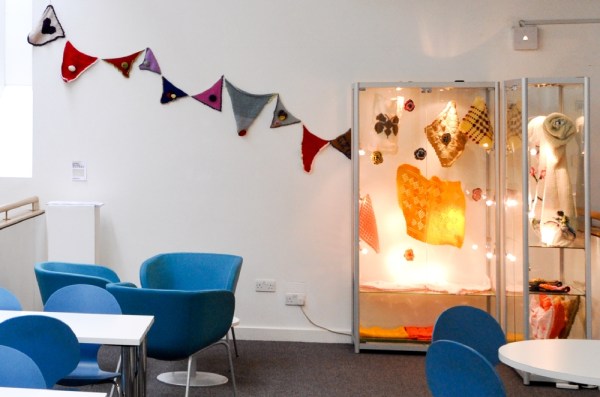
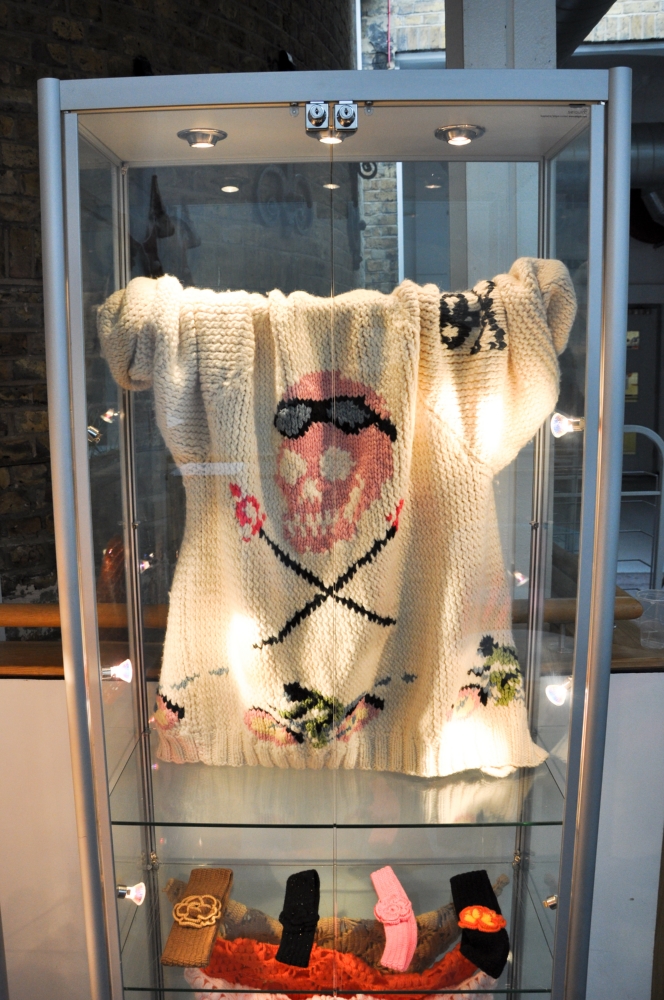
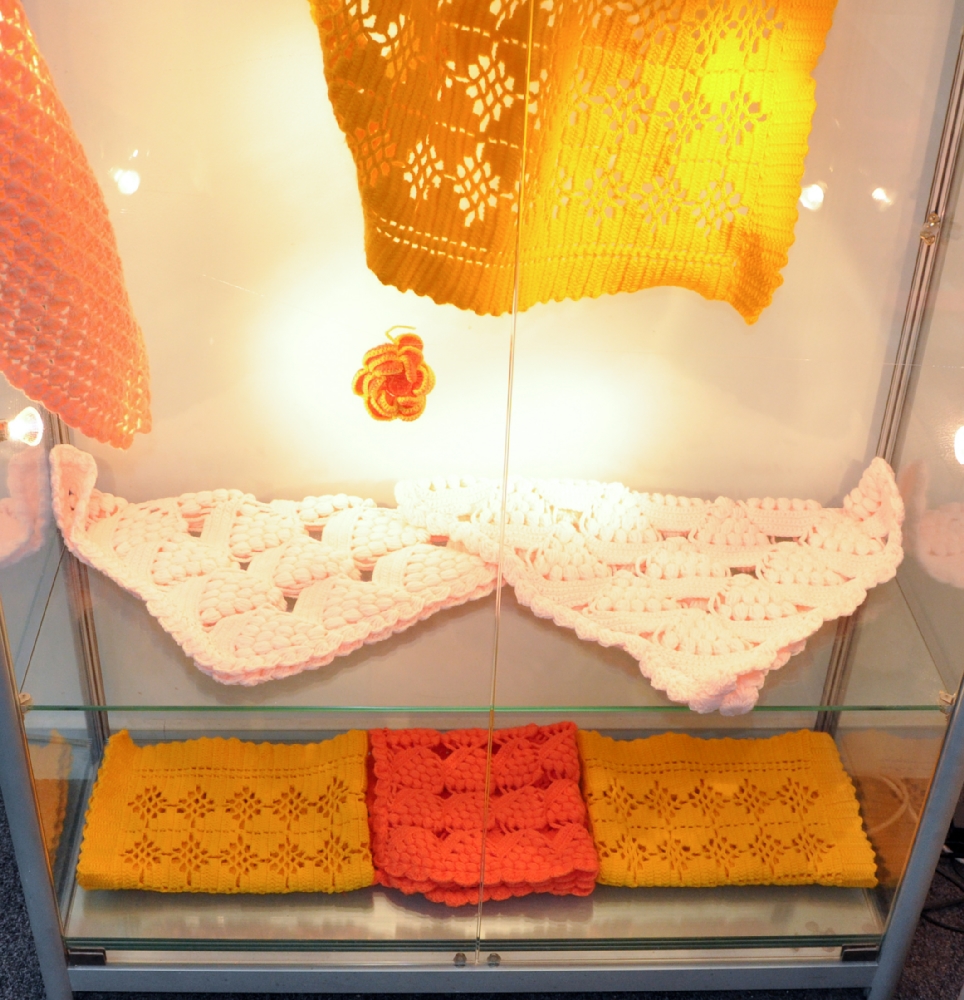
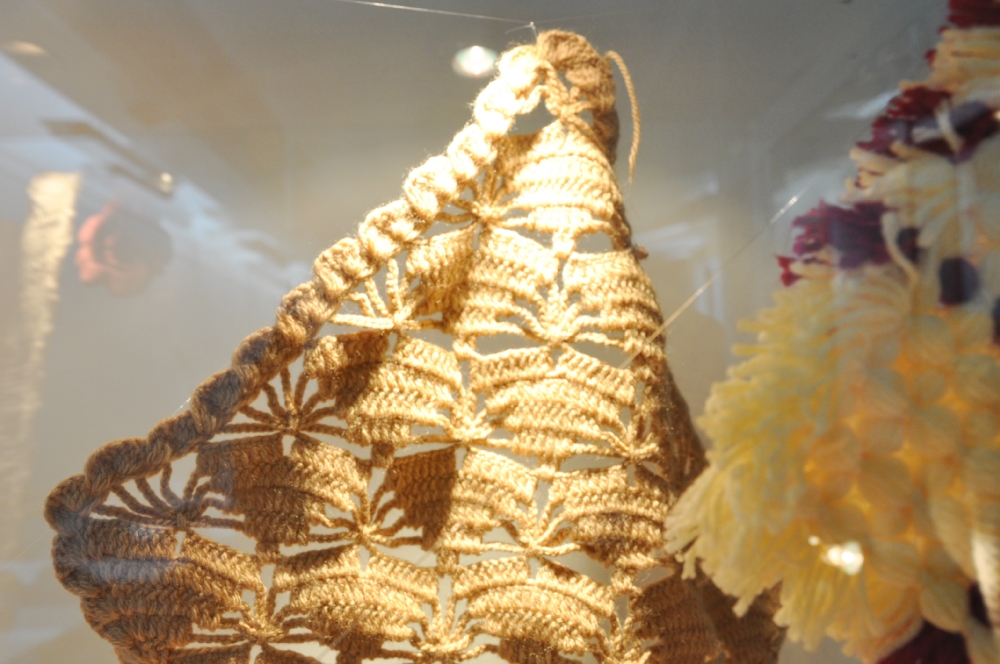
Golmohammadi exhibits a jumper that displays her interest in the ambivalent clash between hard and masculine motorcycle culture, versus the soft domesticity of knitting.  The  imagery of a pink skull with sunglasses that is embedded within the white heavy wool creates an intriguing scene where the two seemingly contradictory worlds collide.  Meanwhile, the rest of the cabinet is occupied by Lakoli’s vibrant and rhythmic patterns.  Soft pink, ochre, brown, and purple flowers are hung delicately, illuminating the material and versatility of yarn.  Not only are Lakoli’s techniques emphasised through the display, but the suspension of knitted or crochet materials aim to engage a different perspective and experience of knitted objects.  On the far end of the wall, an ongoing bunting project by the students of   Crochet and Knit Night Out extend and meet the works of Neil Stoker who uses linen thread to create an ephemeral and inconspicuous installation.  The bunting in fact plays a large role in making a meaningful connection between the two exhibitions through similarity in material.

For more information on the artist or the exhibition, please contact Erica Shiozaki at ericas@wmcollege.ac.uk

Top shelf: Lili  Golmohammadi

Bottom Shelf: Elizabeth Lakoli.

Elizabeth Lakoli

Detail of Lakoli’s Knit work

Detail of Knit Flower

Detail of Lakoli’s knit work

Detail of Lakoli’s knit work

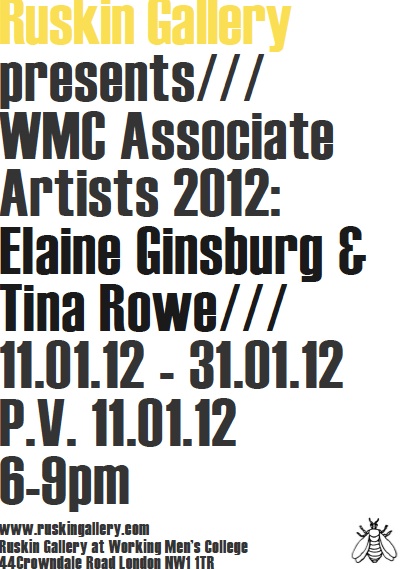
WMC Associate Artists 2012: Elaine Ginsburg and Tina Rowe


Associate Artist 2012 Elaine Ginsburg and Tina Rowe

11 January – 31 January

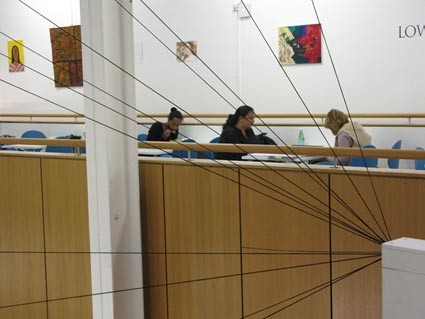
Ruskin Gallery at Working Men’s College is pleased to announce the upcoming duo exhibition by Associate Artists Elaine Ginsburg and Tina Rowe.  Associate students at the WMC aim to develop independent creative projects over one year.   The small tailor made programme enables students to build their portfolios in their specialist fields before entering the creative industry or applying for postgraduate studies.

Using a wide range of media, Ginsburg is driven by thorough investigation of materials and techniques.  This show presents her recent experiments with solutions of acrylic paint applied to paper and raw canvas with foam sponges, which she makes herself.  She plays with layering, glazing and wiping off ambiguous semi-organic forms and subtle injections of contrasting colour.  This reflects her interest in process and what philosopher Christine Battersby (in her book The Phenomenal Woman, 1998) has called “a feminist metaphysics of fluidity”, which focuses on “becoming rather than being, where new forms are perceived from forgotten patterns of difference”.

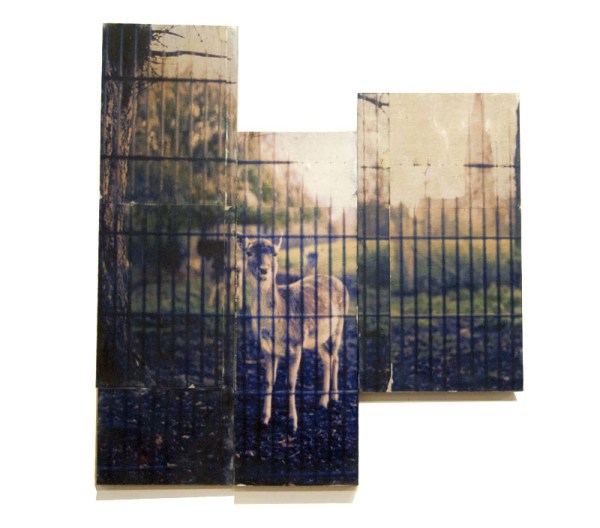
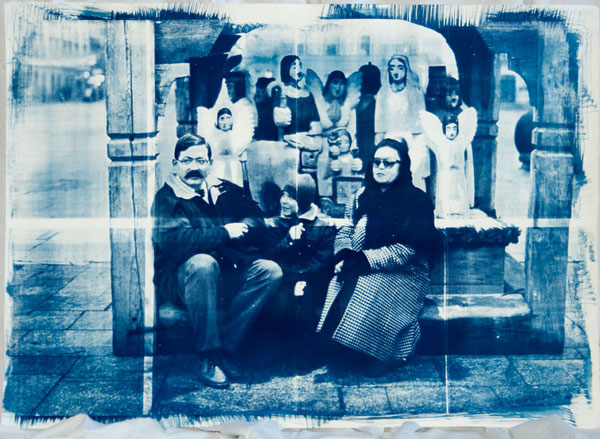
Process and material are also a key focus in Rowe’s production.  By introducing the print to layers of liquid chemicals and pigments, Rowe observes the reaction and manually manipulates the colours and shades of the photographic images.  This processing of images on various types of paper allows a greater degree of creative freedom that is different from that of digital construction. The resulting vibrant cyanotypes act as a reminder of the physical labour and chemical reactions inherent in the field of photography.  Contrary to Ginsburg’s abstract pursuit, Rowe’s photographic subjects include families and strangers in Krakow or Hamburg that are brushed with multiple colours and dipped in sunlight.

The exhibition will be accompanied by an essay written by the curator.

For more information about the artists and for images of their works, please contact Erica at EricaS@wmcollege.ac.uk or through http://www.ruskingallery.com.

Exhibition Preview: Friday 13th January 6-9pm
Exhibition open Monday to Saturday 10-5pm

Elaine Ginsburg lives and works in London.  Her recent shows include i-sho at The Gallery, Stoke Newington (2011) and Pragmata at Islington Arts Factory (2011).

Tina Rowe lives and works in London.  Her recent shows include London Independent Photographers’ Annual (23rd) Exhibition, Strand Gallery (2011) as well as Fitzrovia Photography Prize, Diemar Noble (2011).

Food for Thought No.1:  Compare and Contrast

Written by Erica Shiozaki

The number two is a strong number.  When presented with two matters, two things, two artists, their characteristics become more decisive, similarities strengthened, and differences more apparent.  The number two is able to propel the process of compare and contrast, of creating analytical tension, repulsing ambiguity and loving coherency.

Superficial differences are clear between artists Elaine Ginsburg and Tina Rowe – in fact they are at times oppositional.  Whilst Ginsburg‘s works are accounted as abstract configuration using paint, Rowe presents figurative images derived from photographs.  The ephemeral allure in Ginsburg’s approach is pronounced in each piece, where round foam strokes dominate the lucid background, and where each layer of paint remain visible, exposing its own purpose.  Ginsburg’s minimal compositions are poetically prescribed, displaying the contrast between warm and cool colours but Rowe depicts images of animals, children, old men and stations.  Her vivacious but nostalgic cyanotypes refract organic compositions, where chemical reactions between light, gum arabic, water, solvent and darkness create images that are bold in colour, yet also faint in existence.

More significantly, their process is equally distinguished from one another.  Ginsubrg’s procedure can be described as wholesome, but Rowe’s photographic process is much more fragmented both technically and aesthetically.  Ginsburg begins with an empty canvas and envisions her composition in a unified way yet Rowe’s method considers each stage, each progression in a semi-encapsulated manner one after the other, with pauses in between.  Whilst Ginsubrg’s compositions work collectively, simultaneously and in unison, Rowe completes her work in segments that can afford a fragmented and ethereal quality in her images.

As differences become clearer, where black gains a few shades and white increases its luminosity, commonalities also appear, strongly yoking the two subjects/objects.  Each silver thread of commonality then gives birth to thoughts and relationships that were previously inconceivable, opening up multiple cells of reality that summon other thoughts.

One of the more considerable aspects to be mentioned here is the artists’ manner towards the act of creation.  One’s manner towards art depicts the relationship they have with art, and not merely their attitudes or artistic processes.  Ginsburg and Rowe present cautiousness, willingness, seriousness, and nervousness in their practices, which were particularly visible during the studio visits we have had.  Ginsburg’s sketchbook acts as a detailed documentation of every artwork she created, that are complete with thumbnail images, precise notes, ideas, and aesthetic formulas.  Equally, Rowe manages a blog by recording every experiment, image, thought and procedure she undertook.  Ginsburg and Rowe both present cautiousness in their practice, slicing and dissecting each method and process, predicting or analysing the outcome through tests.  The two portray a real desire to pursue and to be serious, but they also emit nervous energy that helps discover their definition of art.  This nervous energy is not of anxiousness or rapaciousness, but rather eagerness associated with the greater understanding of the act of ‘learning’.

Perhaps it is because the two artists were introduced to art later in life that they present such manner, or perhaps this is a reading that is deeper than necessary.  Yet, I believe Ginsburg and Rowe strongly epitomise the characteristic of Working Men’s College, where many adults bring in a wealth of past experiences and an equal amount of eagerness into their subjects.  Over the past few months I have noticed that the artworks of adult learners are often unhindered by institutionalised knowledge, amounting to works that feel different, that feel outside of what is commonly understood.  The experience, professionalism, and various branches of knowledge these students bring forth influence their concepts as well as their outcomes, which re-invent the language of art.   I not only believe that artists like Ginsburg and Rowe remind us of the importance of nervous energy, but that they also help shed new light to the vast territory of art.
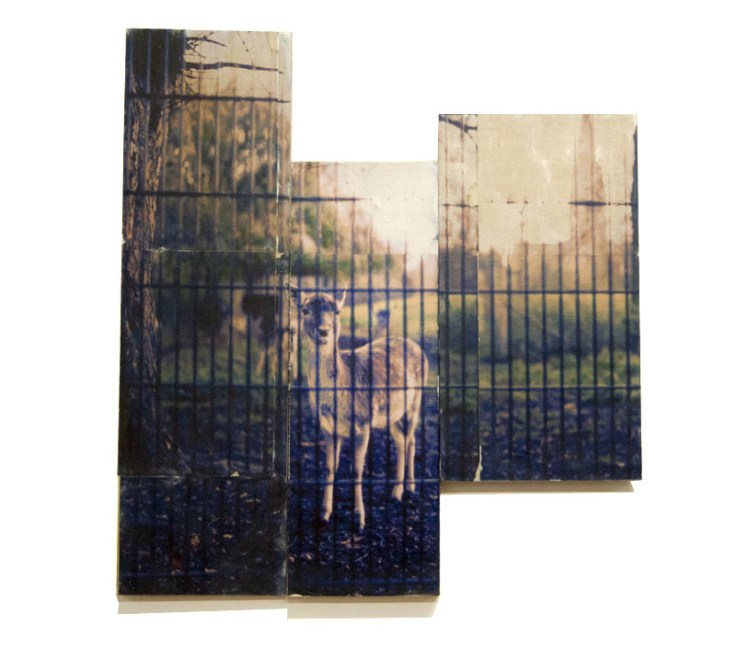
 

Tina Rowe
Deer, 2012
dimensions variable

Andy Charalambous: Singularity

Singularity is a site specific installation commissioned by Ruskin Gallery at the Working Men’s College.  The installation was displayed for two weeks during December 2011.

There are many different definitions available for the word singularity.  Some can describe technological singularities whilst others establish gravitational, or mathematical singularities.

The specific installation attempts to visually describe density singularity, which is usually done by showing a two dimensional plane that has a conical depression, a bit like pressing a finger into a stretched rubber sheet.   Charalambous had stated that he has always imagined lines coming to or from the single point.  Here at the Ruskin Gallery he has translated his scientific endevour into an artistic experience, that is at once as ephemeral and transient as single point of beginning or  end.

Andy Charalambous is a final year FdA fine art student at the Working Men’s College, as well as being Artist in Residence for the Particle Physics group at University College London.

For more information on the artist, please feel free to contact the curator, Erica Shiozaki, or follow the links below.

http://www.andycharalambous.com
art@engineeringart.co.uk

 installation view 1

Installation view 2

 installation view 3

Lowes Dickinson Art Prize 2011

The Lowes Dickinson Prize is named after Lowes Cato Dickinson who was a tutor, artist and founder member of Working Men’s College.  The Prize is funded through a grant left by him to enhance the learner experience at Working Men’s college and has manifested itself in many versions over the years, ranging from travel scholarships to one-off prizes for artworks.

In offering a number of prizes (total value of £2000), the Prize aims to support the learning of students at Working Men’s College.  This year we have created different categories of prize which are linked to the breadth of creative works made by the students in the Arts and Humanities Department.  The categories are: Personal Journey in Learning, Cultural Exchange and Diversity, Sustainability, Contribution to the Community, and Arts and Crafts Heritage.  The 36 artworks displayed at the Ruskin Gallery (WMC) until 2 December 2011.  The exhibition is curated by Resident Curator Erica Shiozaki.

This year’s Panel includes Governor Barbara Burman, CSM Progression Manager Janey Hagger, WMC staff John Bowstead and writer Icilma Warner Johnson.

We wish to thank all the WMC staff members, external individuals, and applicants who have showed enthusiasm and helped  realise the Lowes Dickinson Prize 2011.  Special thanks goes to Susie Wright, Carl Snellgrove and Leonardo Ulian.

Congratulations to all the winners including  Susan Aykroy, Emmar Sarkar, David Glenster, Philip Niesing, Bekki Perriman, and Erik Richards for the Personal Journey and Learning category; Alessandro Carboni for Cultural Exchange and Diversity; Balfour Mohammed and Ashley-Yin Karriem for Contribution to the community;  Marysia Kratimenos for Arts and Crafts Heritage; and finally Zvikomborero Mutayambizi and Kay Clinton for Travel Awards.

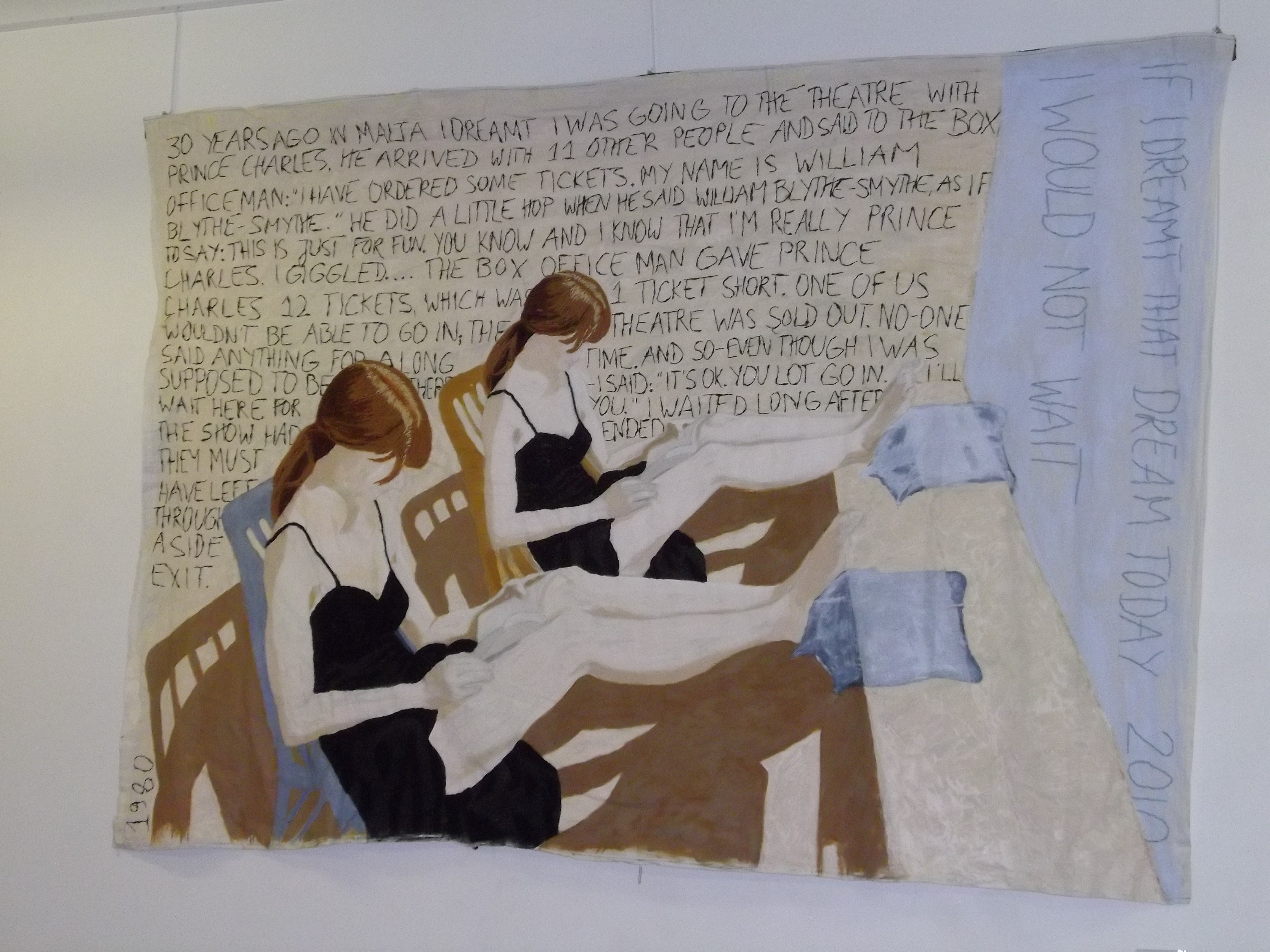
Brigitte Mierau is a storyteller.  She weaves ephemeral moments together, stitches memories, and appliqués metaphors on fabric.  Through her textile, she creates a realm of thoughts that are at once intimate and personal, yet also universal and common.  The obsessive compositions often describe integral points in her world that led her to question life and human-ness.  These are human stories that depict human challenges.

One of the greater concerns for Mierau is our (un)consciousness of time, and as she states, “Time plays a three-fold role; in the form of depicted snapshots in my life; the time I use in the actual making process, and my attempt at trying to slow down time (Mierau, 2011)”.  In resisting the use of machine, Mierau grows conscious of her time and how it flows, and in so doing she gains control of the very element that builds her life.

Her commitment and realisation of ‘time’ has been reflected in works like Homage to Günther (2010), Never Give Up (2010), and Today I Would Not (2010).  The small but ornate embroidery of Günther on his old handkerchief solemnly and sombrely vows to the act of creating, whilst Never Give Up collects influential quotes in the style of comic artist Robert Crumb, and Today I Would Not metaphorically states the urgency to commit to her time.

Her auditory impairment had led her to become much more attuned and conscious of her visual experiences, whether it be a deep dream as seen in A Crack in Time (2011), or a glimpse of reality represented in Millbank (2010).  Mierau’s use of text within her stitching expand on the idea of the visual, and stand as a strong reminder that vision is much more about perception as an internal act, rather than an external or physical manifestation.

Having completed her ACCESS course at WMC, Brigitte Mierau is continuing her study at Camberwell College.

Blog at WordPress.com.

Up ↑